When the Room Runs Out of Things to Say
I’m convinced that ninety-nine percent of all conversations about goal setting happen in one narrow window—the week between Christmas and New Year’s Day.
When everything that had to be said has been said. When you have heard every piece of gossip four times, each a slight variation of the original. When the random bowl game—played between the hype for the upcoming College Football Playoffs—has faded into background noise.
There comes a moment of uncomfortable silence.
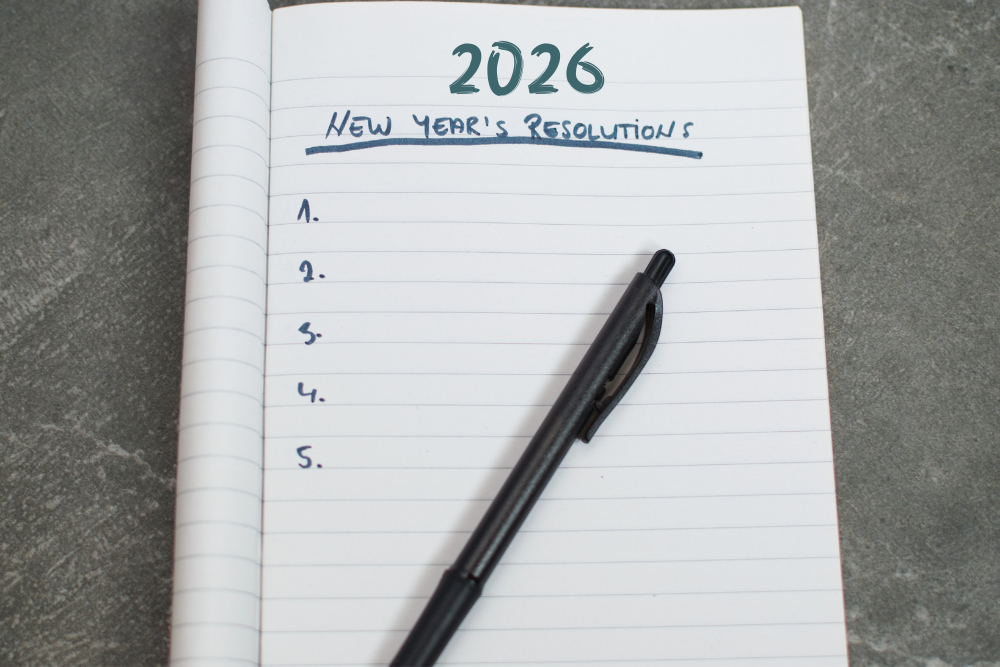
And out of the conversational vacuum, a Great Aunt whose name you cannot remember wants to know everyone’s New Year’s Resolutions.
That is how conversations about New Year’s Resolutions begin. Not out of growth. Not by design. But as an icebreaker, when everything else has run out of energy.
Why New Year’s Resolutions Rarely Work
Once the conversation turns to New Year’s Resolutions, something predictable happens.
Everyone suddenly has one. It begins to feel like a parlor game.
New Year’s Resolutions often fail because they answer the wrong question.
They ask, “What should I stop doing?” Instead of, “Who am I becoming—and where am I headed?”
By the end of January, most people have already quit. Not because they’re lazy. Not because they lack discipline. But because resolutions are usually formed without direction, structure, or identity.
Research suggests that roughly 80% of New Year’s Resolutions fail by February. Not as a moral failure—but as a design flaw.
Resolutions are reactive. They’re emotional snapshots taken at the intersection of exhaustion and optimism.
They emerge from discomfort, holiday overload, year-end reflection, a vague sense that something should change.
But discomfort is not a strategy. And motivation, on its own, is not a system.
The Missing Ingredient: Vision
Lasting growth begins with Vision.
Vision is not prediction. It’s not certain. And it’s definitely not a list of things you should fix about yourself.
Vision is intentional direction.
If you don’t decide where your life is headed, you will still move—but you’ll drift. And drift feels productive until it doesn’t.
Vision answers a deeper question than a resolution ever can: What kind of person do I want my Future Self to be grateful for?
Without Vision, intentions become chores. With Vision, effort becomes meaningful. Vision doesn’t demand perfection. It demands orientation.
Resolutions Are Not Goals — And Goals Are Not All the Same
Here’s where most people get tripped up: Resolutions are not goals.
Resolutions are declarations of intent—often vague, often reactive, frequently disconnected from identity.
Goals, on the other hand, are tools. And like any tool, they matter only when used correctly.
There are achievement goals and becoming goals.
Achievement goals focus on outcomes:
- Lose 20 pounds.
- Hit a revenue number.
- Finish a project.
Becoming goals focus on identity:
- Become a disciplined person.
- Become a thoughtful leader.
- Become someone who keeps promises to themselves.
Achievement goals tell you what you want. Becoming goals shapes who you are while pursuing them. Both matter, but becoming goals must lead.
Frameworks like the Full Focus SMARTER Goals, developed by Michael Hyatt, are powerful because they recognize this distinction. They don’t just measure achievement; they reinforce identity, alignment, and intentionality.
But even the best goal framework fails if it’s treated as a one-time event. Growth is not static. You grow. The world changes. And the goals that once fit your life eventually stop fitting.
Which means goals require maintenance.
Why New Year’s Is Useful — But Not Because of Resolutions
New Year’s is not powerful because it gives us resolutions. It’s powerful because it gives us pause. And pause is where evaluation happens.
This is where the Continuous Growth Loop comes in.
Growth doesn’t happen by setting goals once and hoping for the best. Growth happens through a rhythm:
Revisit → Revise → Refine
- Revisit
You look honestly at where your time, energy, and attention went.
Not to judge—just to see. - Revise
You adjust direction, structure, or expectations based on what you learned.
Revision isn’t failure—it’s stewardship. - Refine
You simplify. You strengthen. You deepen alignment.
Refinement is where identity quietly sharpens.
This loop replaces the fantasy of arrival with the practice of return.
New Year’s is a good time for a deep dive into this loop—but the loop itself is meant to run all year long.
Polishing the Pillars: Service to Your Future Self
When you use the Continuous Growth Loop intentionally, it strengthens the three pillars -Vision, Systems, Becoming – of the Service to your Future Self Framework:
- Vision becomes clearer because you revisit it regularly.
- Systems become sturdier because you revise what no longer supports you.
- Becoming becomes embodied because refinement shapes identity, not just behavior.
Growth isn’t linear. It’s recursive.
This is where fractals matter.
- You revisit the same questions at deeper levels.
- You refine familiar habits with greater wisdom.
- You revise direction without losing momentum.
Zoom in or zoom out—the pattern holds.
That’s the power of the Continuous Growth Loop. Not a dramatic transformation. But sustainable alignment.
Closing Thought
New Year’s Resolutions aren’t broken. They’re just misused.
Growth doesn’t require a fresh start. It requires a faithful return.
Revisit what matters.
Revise what doesn’t fit.
Refine who you are becoming.
That’s not a parlor game. That’s how you live in Service to your Future Self.